
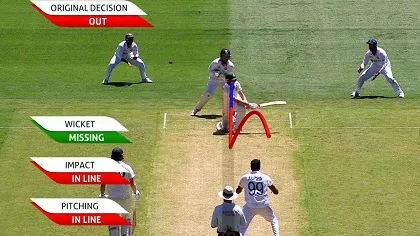
Few modern cricket rules create as much discussion as the Decision Review System. A close LBW call, a faint edge or a disputed catch can change the direction of a match, and players now have limited opportunities to challenge some on-field decisions. The technology looks immediate on television, but several separate steps sit behind each review.
For newer followers, understanding the drs full form in cricket is only the starting point. DRS means Decision Review System, but knowing when a review can be requested and how different forms of evidence are considered makes the process much easier to follow.
Why DRS Exists
Cricket has always depended on umpires making decisions in real time. Even experienced officials must judge events that happen in fractions of a second. DRS was introduced to give teams a limited way to challenge certain decisions and to allow the third umpire to use available technology before confirming or changing a call.
It does not remove the on-field umpire from the game. In many situations, the original decision remains important, especially when the evidence is not strong enough to overturn it. That balance is one reason DRS can still produce debate even when several camera angles are available.
What Happens After a Player Reviews
When a player asks for a review, the third umpire works through the relevant evidence. The order depends on the type of dismissal being examined. For an LBW decision, for example, checks may include whether the delivery was legal, whether the batter hit the ball, where the ball pitched, the point of impact and the projected path toward the stumps.
For caught-behind decisions, replay angles and audio-based tools may be used to look for contact between bat and ball. The technology available can vary between competitions, which is another reason viewers should avoid assuming every match uses the same review setup.
Understanding Umpire’s Call
One of the most misunderstood parts of DRS is “umpire’s call.” Ball-tracking is a projection based on where the ball is judged to have traveled and where it would have gone. When the projected contact with the stumps falls within a defined marginal area, the original umpire’s decision can remain in place.
That does not necessarily mean the technology has failed. It reflects the system’s approach to very close cases. The on-field decision still carries weight when the projected result is within that margin.
Reviews Are a Tactical Resource
Teams do not have unlimited reviews. Captains and batters therefore have to decide quickly whether a challenge is worth using. A poor review early in an innings can leave a side with fewer options when a more important decision arrives later.
Good reviewing is partly about reading the incident and partly about communication. A batter at the non-striker’s end may have a better view of where the ball pitched, while a wicketkeeper can sometimes judge an edge more clearly than a fielder farther away.
The Rules Matter as Much as the Technology
Fans often focus on ball tracking or edge-detection graphics, yet the drs rules in cricket also cover timing, who may request a review, what types of decisions can be examined and how a review is retained or lost. Those details can differ when playing conditions are updated.
This is why it is better to check the regulations for the competition being watched rather than rely on a rule remembered from an older series. Cricket’s review procedures have developed over time and can be refined again.
Why DRS Still Creates Arguments
Technology can reduce some obvious errors, but it cannot turn every cricket decision into a perfectly objective event. Camera angles have limits, ball tracking involves modeling, and catches close to the ground can remain difficult to interpret.
That uncertainty is part of why DRS conversations continue long after matches finish. The system gives officials more information, not a guarantee that every close call will satisfy both teams.
Conclusion
DRS is easiest to understand when it is viewed as a structured review process rather than a machine replacing the umpire. The on-field call, available technology and competition rules all work together to reach the final decision. Readers who want to explore more cricket rules and match explanations can visit sportsgotec.com for guides covering playing conditions, terminology and other parts of the modern game.
